
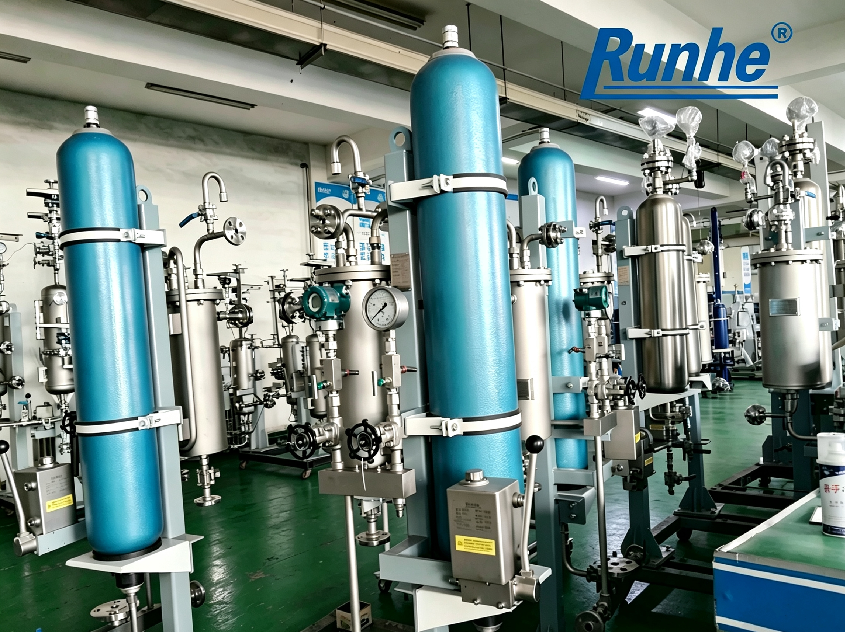
Why Mechanical Seals Need Auxiliary Systems (Plan 21/23/52/53B)
A mechanical seal operates with two high-speed sliding seal faces. A micro-thin liquid film between these faces provides essential lubrication and heat dissipation. Once the liquid film becomes unstable or
damaged, the seal faces will suffer dry friction, overheating, coking and crystallization, eventually resulting in seal failure and medium leakage. Auxiliary systems are designed to stabilize the operating environment
of the liquid film and protect mechanical seals for long-term reliable service.
Four Core Functions of Seal Auxiliary Systems
1. Temperature Control and Heat Dissipation
High-temperature process media, combined with friction heat generated during operation, will overheat the seal faces. This causes the interfacial liquid film to vaporize and leads to dry running, which rapidly
wears and burns out graphite seal rings. Auxiliary systems such as Plan 21 and Plan 23 adopt heat exchanger circulation cooling, effectively removing accumulated heat and maintaining a stable working
temperature for seal faces.
2. Stable Liquid Film and Continuous Lubrication
Direct metal-to-metal contact between rotating and stationary seal rings is strictly prohibited during operation. The entire sealing performance depends on a uniform micron-level liquid film. For media that are
volatile or prone to vaporization, the liquid film is extremely fragile. Auxiliary systems continuously deliver clean circulating flush fluid to ensure stable lubrication between seal faces at all times.
3. Particle Isolation and Anti-Wear Protection
Industrial process media often contain solid particles, impurities and crystalline substances. If these particles enter the seal face gap, they will scratch and abrade the sealing surface, causing persistent leakage and
premature seal failure. Plan 52 and Plan 53 series systems inject clean barrier fluid to isolate process media and solid contaminants, protecting the precision seal faces from abrasive damage.
4. Pressure Stabilization to Prevent Flashing and Vaporization
Most chemical and industrial media are sensitive to pressure changes and easily vaporize under low-pressure conditions. The pressurized barrier system of Plan 53 maintains the seal chamber pressure higher than
the medium’s saturated vapor pressure. It effectively avoids medium flashing, vaporization and cavitation inside the seal chamber, eliminating seal damage caused by gas-phase operation.
#Auxiliarysystem#Barrierfluid#Flushfluid#Sealface #Sealchamber


 export@rhseal.com


