
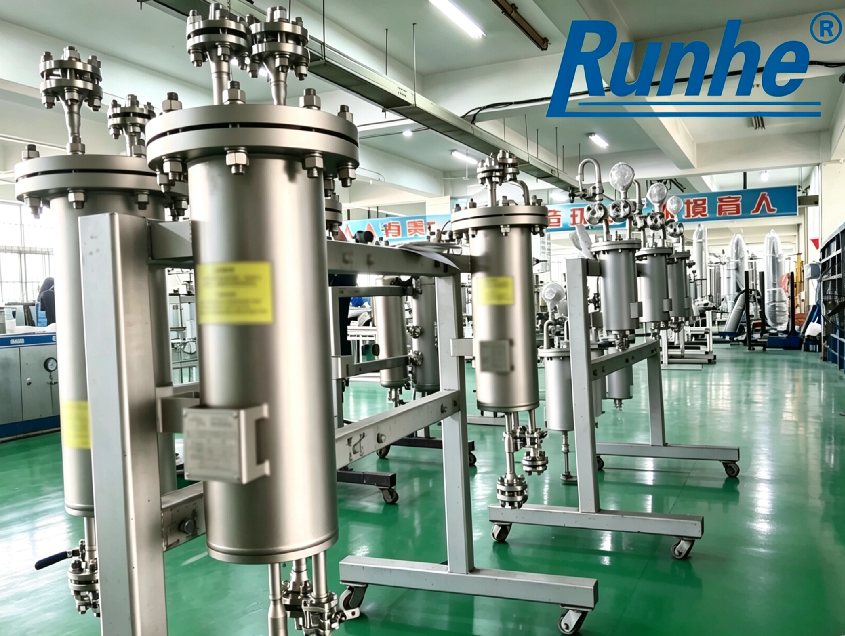
Plan 21 and Plan 23 are two widely‑used mechanical seal flush arrangements fitted with heat exchangers. These solutions are engineered for high‑temperature operating conditions to safeguard mechanical seal
faces from overheating and failure.
Plan 21 is an open‑circuit flush configuration that draws process fluid directly from the pump discharge. Process fluid is routed through an orifice plate before passing through the heat exchanger for cooling. The
cooled fluid flows continuously into the seal chamber to deliver flushing, lubrication and heat dissipation for the seal faces, then returns to the pump casing. No pumping ring is required.
Because the heat exchanger continuously handles high‑temperature fluid from the pump discharge, it carries a high heat load and faces potential fouling risk. Plan 21 works best for medium‑temperature, clean
and non‑coking process fluids.
Plan 23 is a closed‑circuit self‑circulating cooling solution, a preferred choice for high‑temperature mechanical seal applications. Unlike Plan 21, it does not draw fluid from the pump discharge. A pumping ring
integrated into the mechanical seal drives fluid inside the seal chamber to circulate between the heat exchanger and the seal chamber.
This design delivers low heat load on the heat exchanger, good fouling resistance and reliable, stable cooling performance. Plan 23 is highly recommended for high‑temperature hot water and boiler feed‑water
pump services.
Key Differences: Plan 21 adopts open‑circuit external fluid supply with a high heat load on the heat exchanger; Plan 23 uses in‑chamber closed‑loop circulation for more stable cooling.
#Plan21mechanicalseal#Plan23mechanicalseal#mechanicalsealflusharrangement#heatexchangermechanicalseal#high‑temperaturemechanicalseal#boilerfeedwatermechanicalseal


 export@rhseal.com


