
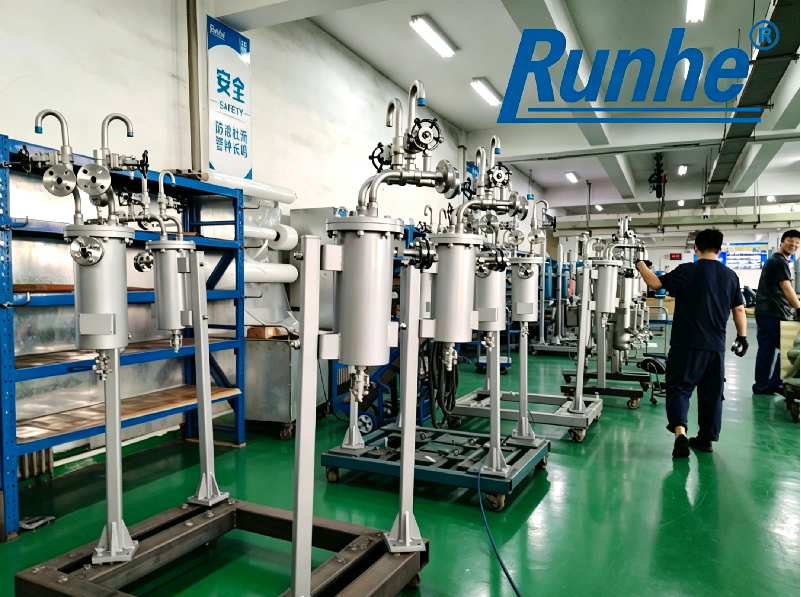
Heat Exchanger Functions
Core Principle
A heat exchanger is an industrial device that transfers thermal energy between two or more media via a thermally conductive solid wall. Hot and cold fluids exchange heat without
intermixing, and the equipment is widely adopted for industrial heating, cooling, condensation and waste heat recovery applications.
Key Industrial Functions
1. Cooling & Temperature Reduction
High-temperature process fluids flow through the heat exchanger, and their temperature is lowered to the required operating range by cooling water or forced air cooling.
Typical application: Cooling of seal oil for mechanical seal systems and pump units. Heat exchangers are installed in API Plan 53B seal support systems to stabilize seal operation and
prevent high-temperature failure of mechanical seals.
2. Heating & Temperature Rise
High-temperature steam, hot thermal oil or other heat transfer media are used to heat raw water or process fluids to the target working temperature required for industrial production.
3. Condensation
High-temperature steam is cooled and converted into liquid condensate, which realizes condensate recovery and improves resource utilization efficiency.
4. Waste Heat Recovery (Core Energy-Saving Function)
Heat contained in high-temperature waste media generated during industrial production is transferred to cold media for secondary utilization. This greatly reduces the consumption of
steam, electric energy and other energy resources, and is extensively applied in petrochemical, chemical and other heavy industries.
#heatexchanger#heatexchangerprinciple#industrialheattransfer#wasteheatrecovery#processcooling#mechanicalsealcooling


 export@rhseal.com


