
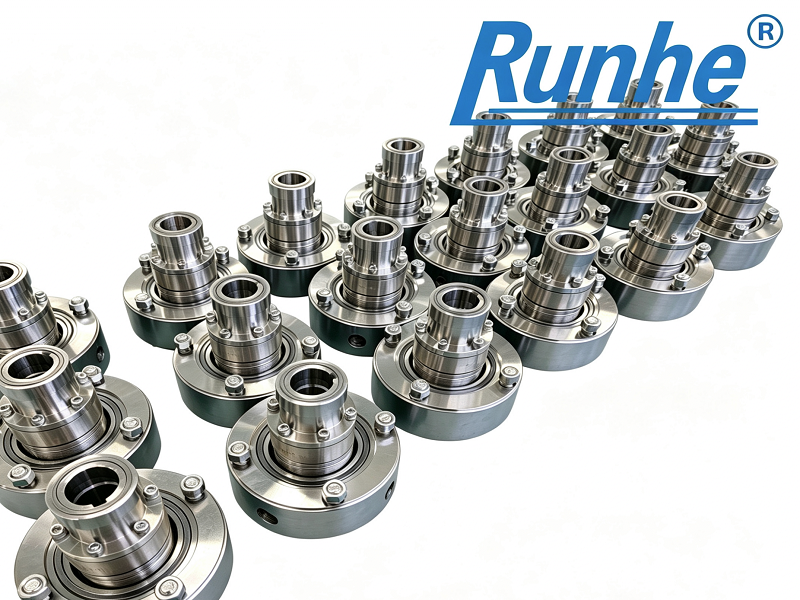
Maintenance of Mechanical Seals
(1) Maintaining the Stability of Fluid Film
Where oil-based fluids serve as the sealed medium for mechanical seals, their high viscosity and excellent lubricating property stabilize the fluid film generated between the mating faces of rotating and stationary rings. By contrast, pure water undermines fluid-film stability at sealing faces and easily results in leakage. Where process conditions allow, additional lubrication applied to mechanical seals optimizes sealing performance against leakage and prolongs seal service life.
(2) Sustaining Functional Efficiency of the Cooling System
Mechanical seals achieve liquid-lubricated sealing via the fluid film formed between rotating and stationary mating faces; dry running of seal faces is strictly forbidden. Dry contact triggers fluid-film vaporization and hinders the dissipation of frictional heat, further causing thermal cracking or rupture of seal mating pairs. Therefore, continuous, unobstructed supply of flush coolant must be guaranteed for all operational mechanical seals. For seals relying on pumped process fluid for cooling, sufficient medium flow shall be maintained at all times.
(3) Proper Operation of Mechanical Seals
Progressive leakage increase commonly occurs after long-term seal service. To mitigate leakage volume, some operators improperly drain all liquid out of pump casings in violation of operating specifications. Such improper draining leads to transient dry running between seal faces and drastically shortens the service life of mechanical seals.
(4) Appropriate Replacement of Mechanical Seals
Seal leakage is frequently attributed to changed internal pump clearances or fluctuating working conditions instead of damaged seal hardware. Field troubleshooting requires accurate identification of root causes: faulty seal components or abnormal pump operating parameters.
As a typical example, excessive wear of a pump balance disk will trigger abrupt medium leakage at the end mechanical seal of a multistage centrifugal pump. If the seal assembly itself remains undamaged, thorough cleaning and reinstallation are sufficient for restoration. When replacing a worn-out seal with a new one, a new seal with substandard material grade or out-of-tolerance face surface roughness will deliver inferior performance compared with the original seal.
#MechanicalSealMaintenance#PumpSealLeakage#DryRunningProtection#SealFluidFilm#CentrifugalPumpSeal#SealServiceLife


 export@rhseal.com


